
Spoiler alert: this post discusses the plot of Beast in detail, including the ending. If you haven't watched it yet, go watch it, then come back. I'll wait.
I just finished Beast, the new MMA drama directed by Tyler Atkins and written by Russell Crowe and David Frigerio, and I have thoughts. Good ones. The film is a masterclass in one word every storyteller should tattoo somewhere visible: stakes.
What Are Stakes, Anyway?
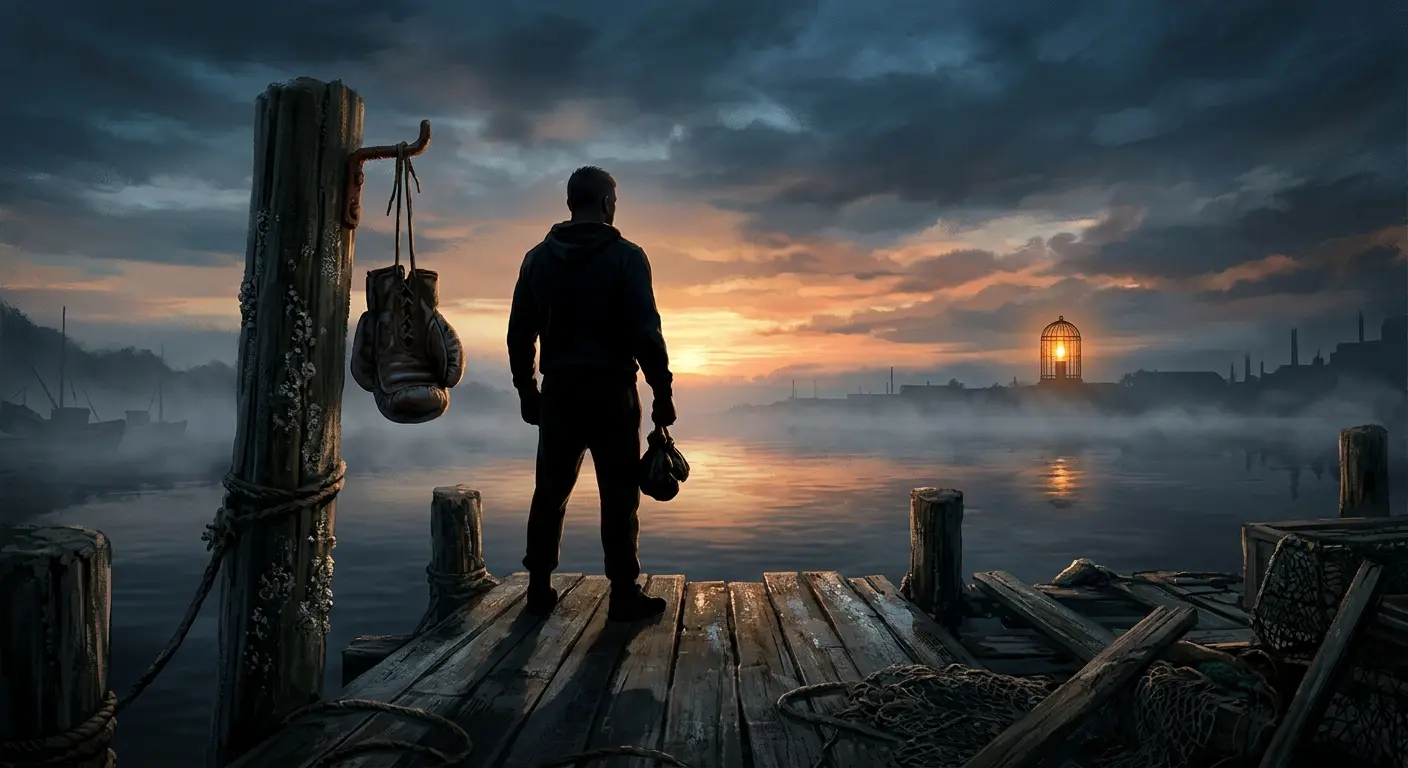
Stakes are what a character stands to win or lose. They answer the question every audience quietly asks: why should I care what happens next?
Here's my point, and I'll stand on it: we don't love Rocky or Creed because there's fighting. We love them because of the stakes. Fight scenes are great, but why they're fighting, and what the fight means to each fighter, matters far more. Take away the stakes and you're left with two people hitting each other, which you can see for free at any family wedding.
Beast understands this completely, and it shows in every choice the writers make.
Meeting Patton at Exactly the Right Moment
We meet our lead, Patton James (Daniel MacPherson), at the precise moment we need to. The opening shows him in his prime, at work in the ring, just enough to set things up. Then the story moves to the present, to what matters most.
We don't sit through his time in jail. We don't get a long montage of his fall. I love the quality of the scenes the writers chose to put in the final script. (Or is it the scenes they chose to leave in? In a script you're mostly cutting stuff out, so the final draft is whatever survives. Yeah, whatever, you get my point. 😄) Every scene that remains earns its place.
Prison Is Backstory, and Backstory Stays Backstory
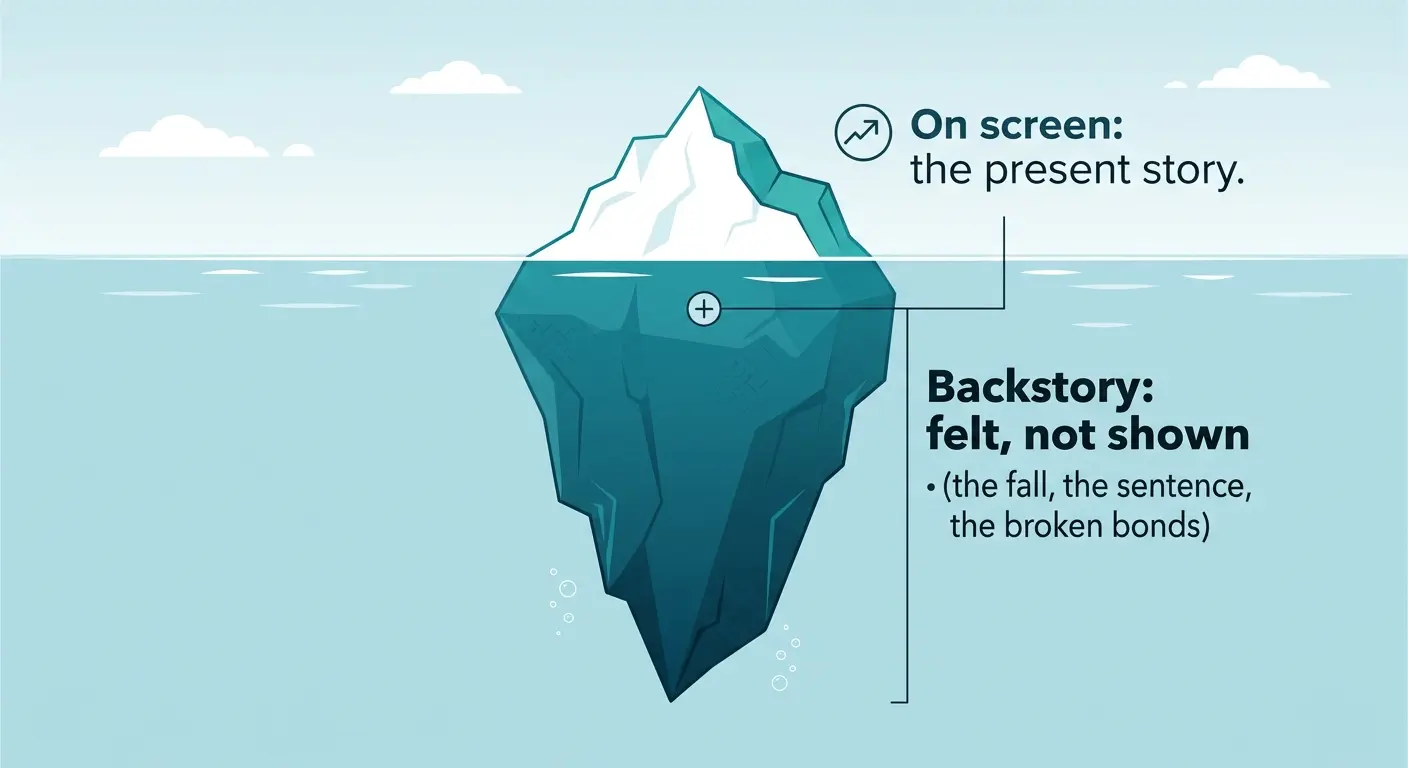
Here's something that matters for my main point. Patton's time in jail is backstory. It explains who he is, but it isn't what the story is about. The writers trusted us to understand it through the relationships and the damage left behind, rather than filming it.
That's restraint, and restraint is a writer's superpower. Backstory is the iceberg under the water. The audience only needs to see the tip, and a few cracks in the ice will tell them everything else.
Why a Living Malon Beats a Remembered One
Some writers would have written a different version of this story. They'd introduce us to the lead after his younger brother is already dead, fill the middle with junk (unimportant scenes, really), and keep the brother only as a memory.
The writers of Beast did the braver thing. They introduced Malon (Mojean Aria) alive and active. He loses a fight against Xavier Grau (Bren Foster), Patton's old opponent. Suddenly Xavier isn't content with beating the little brother of the man who humiliated him before. He wants Patton himself.
Patton, meanwhile, works as a fisherman and gets fired. He takes the fight to pay the bills and to help pay off Malon's debt. A living brother means we've watched the relationship, felt its cracks and hoped for its repair. When it's later taken away, we feel the loss because we've seen what was there.
Layering the Stakes, and Then Layering Some More
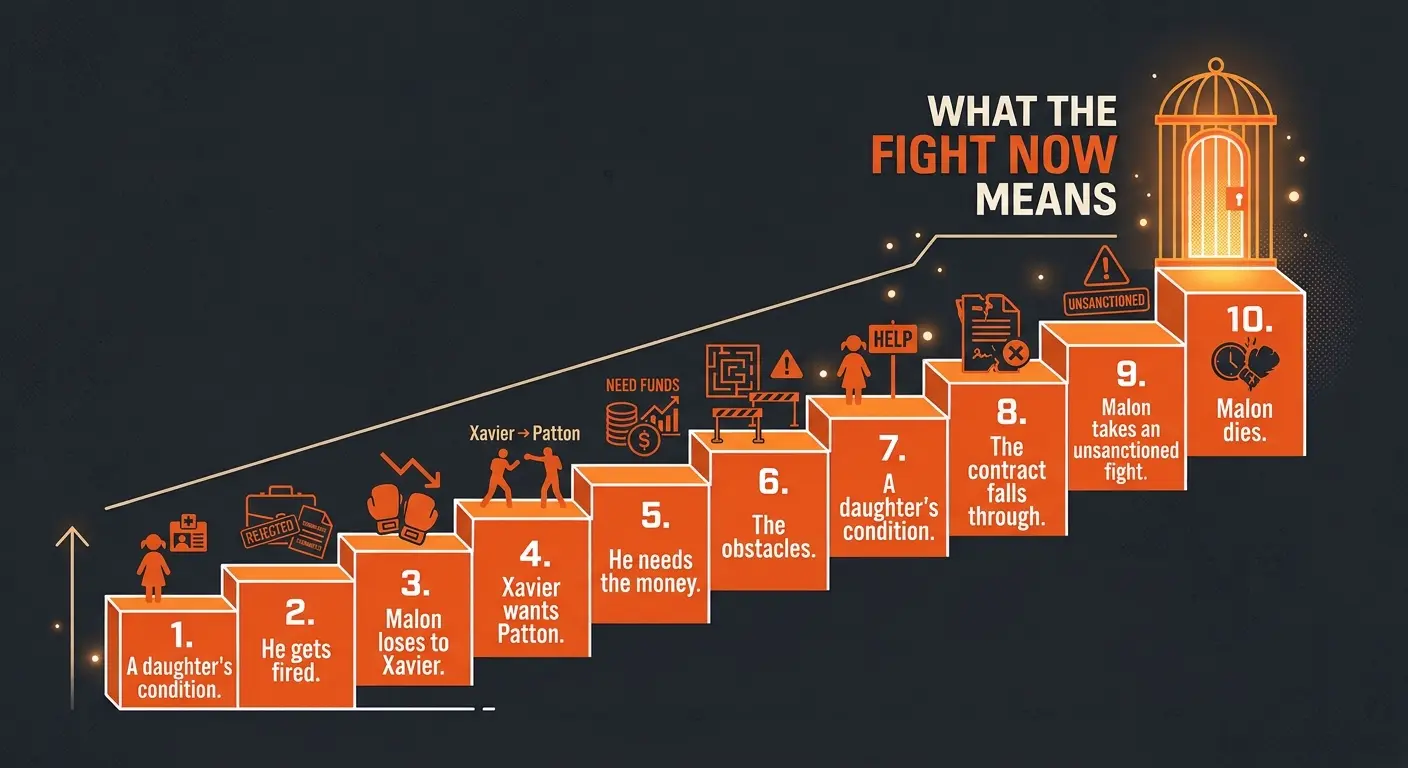
Normally, in a lesser film, the fight would happen, the hero would win it after some obstacle, and the family would enjoy the money and live happily ever after. That wouldn't have been a disaster. It would have been average. Instead, Beast keeps stacking pressure until the fight means almost everything. Look at the layers:
A bad season. Patton is comfortable as a fisherman, but business is rough.
He gets fired. Now he's unemployed, and the bills don't care.
Malon loses to Xavier. Before he's even had a chance to make a name, the little brother is beaten.
Xavier wants Patton. He isn't content beating the kid. He wants the man who humiliated him.
He needs the money. The fight stops being optional.
The obstacles. Patton hasn't fought in a while, and his wife, Luciana (Kelly Gale), doesn't want him fighting.
A daughter's condition. Money matters more because of his little girl, Maddie.
The contract falls through. Patton's fight is gone because of a contract breach.
Malon takes an unsanctioned fight. He steps in, putting his life in danger.
Malon dies. He's injured in the fight and dies.
At that last layer, everything changes. It's no longer about money or bills. Luciana, in spite of herself, has to let him fight. His father has to show his support. Patton pushes himself harder than ever. (I won't narrate the rest. Go watch the movie. I know, I know, I should have said that at the start, actually, I did. 😄)
That's great storytelling: each layer raises the cost of failure, until the fight stops being a fight and becomes a reckoning.
The Dynamics Between Characters
Stakes aren't only about money and danger. They live in relationships, and Beast is loaded with them.
Malon looked up to Patton, and now resents him for disappointing him and for leaving the sport. Yes, Patton was arrested, but he never returned to fighting after his release, and a younger brother doesn't forgive that easily. Then there's Sammy (Russell Crowe), Patton's coach and father. He's even more upset. It's almost as if Patton's MMA career meant more to him than it did to Patton himself. That passion explains why his anger runs so deep, and why we understand it.
Luciana wants Patton to take any job but fighting. She hates the idea of making money from violence and other people's pain. And then there's Patton's workmate, the one person who seems to be in his corner. That makes sense, because Patton is a genuinely good guy, and I believe that's exactly why the character exists.
Every one of these relationships pulls Patton in a different direction. Disappointing one person is hard. Disappointing his brother, his father, his wife and his own conscience at the same time? That's pressure.
Cause and Effect: The Engine Under the Hood
Here's another reason Beast works. A cause leads to an effect, which becomes the cause of the next effect, and so on. Patton gets fired, so he needs money. He needs money, so he takes the fight. The fight collapses, so Malon steps in. Malon steps in, so tragedy follows.
That chain only works because the scenes that survived into the final script are high quality. Nothing is filler. If you pulled one link out, the whole chain would rattle. This is what I mean when I say the writers' choices of which scenes to include matter so much.
The One Flaw: Maddie's Condition
I promised honesty, so here it is. I found exactly one flaw. We're told Maddie has some kind of condition, and it isn't really clear what it is. The film makes us believe it's threatening and serious. But she looks perfectly fine. Nothing seems wrong with the girl.
I understand why it's important to the story, because it adds another layer to Patton's need for money. But it isn't believable as it stands. A clearer diagnosis, a visible symptom or even one tense scene would have made the stakes land. It's a small crack in an otherwise strong structure.
What Storytellers Can Learn From Beast
If you write, here's your cheat sheet:
Start late. Meet your lead at the moment that matters, and leave the backstory beneath the surface.
Keep people alive on screen. Let us love someone before you take them away.
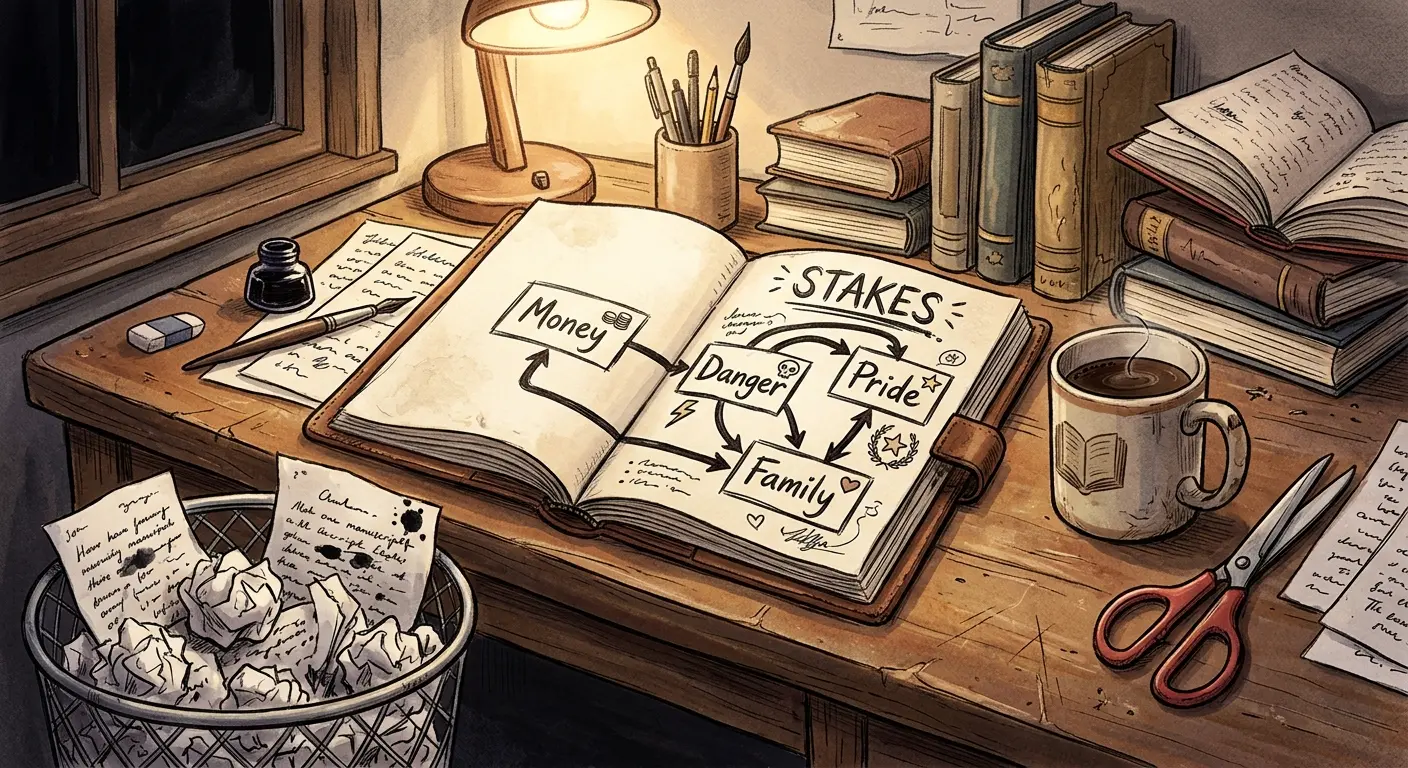
Layer the stakes. Money, family, pride, danger. One reason to fight is fine. Five is a story.
Build relationships that clash. Conflict between characters is stakes in human form.
Chain your scenes. Every scene should cause the next one.
Cut ruthlessly. If a scene doesn't earn its spot, it isn't in the final script.
Final Thoughts: It's All About the Stakes
Layered stakes, a tight cause-and-effect chain, rich character dynamics and a script that keeps only its best scenes: that's why Beast works as a story. Fighting gets our attention, but stakes get our hearts.