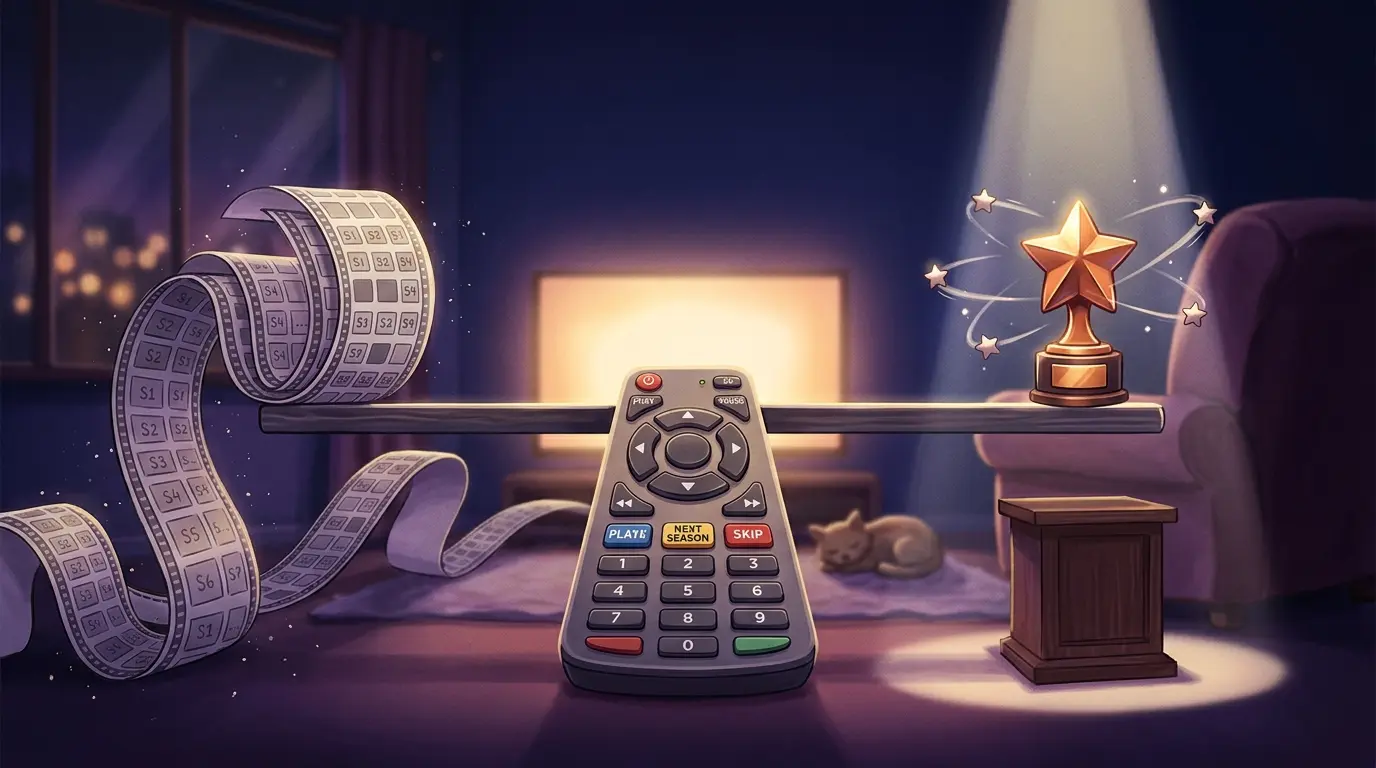
Quick question: if a show runs for fifteen seasons, is it automatically a masterpiece? Ask the internet and you'll get a confident "obviously!" Ask me and you'll get a longer answer, mostly because I can't help myself.
Here's the popular belief: the longer a TV show runs, the better its story. There's real truth in that. But there's another reality, one I think holds just as true, that rarely gets airtime. A show's length often says more about the shape of its story than the quality of its story. In this post I'll make my case without calling a single show terrible. (Relax, fans. I come in peace.)
One big disclaimer up front: nothing here takes away from the hard work showrunners pour into keeping a series alive for years. Respect.
The Longer-Is-Better Myth (Partly True)
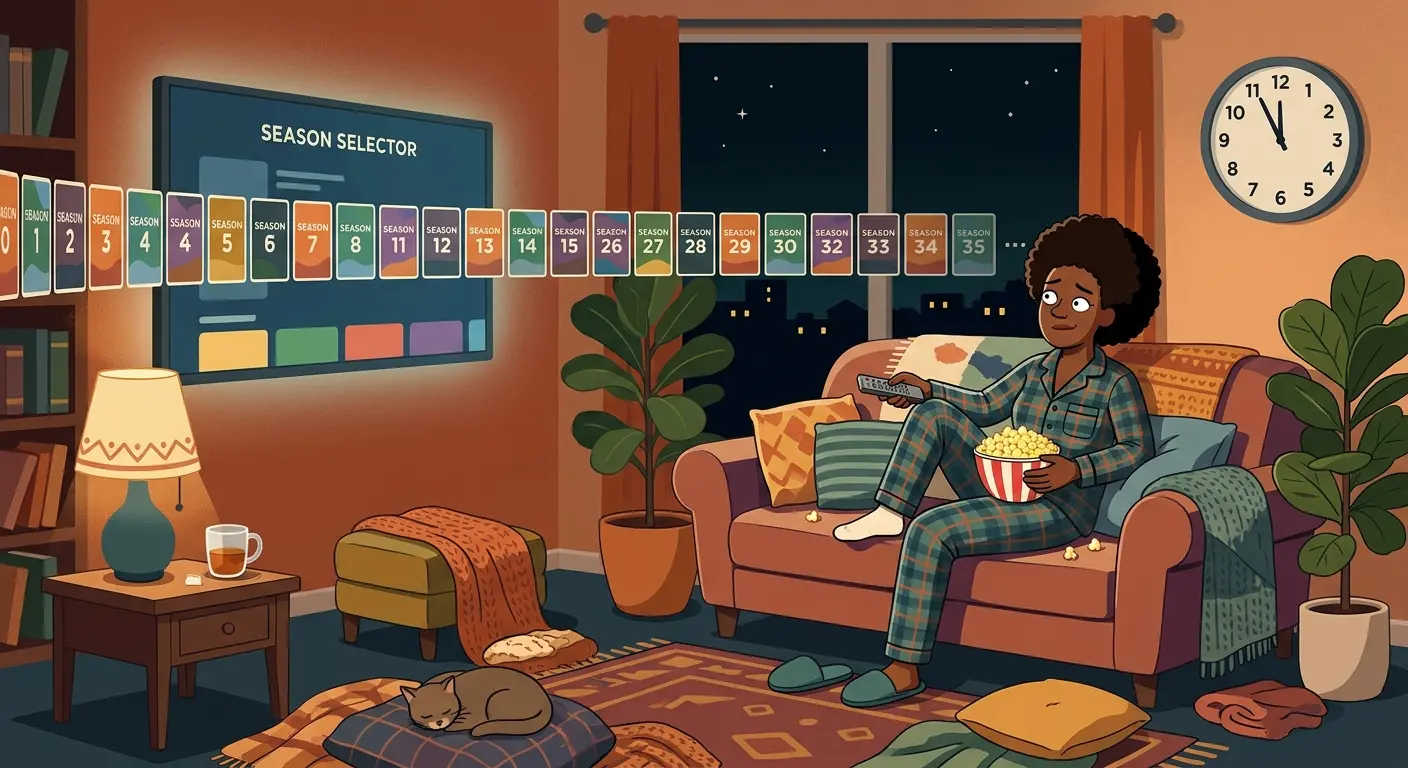
Let's give the popular view its due. A show that survives many seasons has done something right. Audiences keep tuning in, networks keep paying the bills, and the cast keeps showing up to work. In an industry where plenty of new series vanish before most of us finish the pilot, longevity is an achievement. Keeping a writers' room fresh, a cast motivated and a story coherent across years is a marathon, and the people running it deserve a hat tip.
There's also a reasonable floor. I've heard that great shows tend to run a minimum of about four seasons, and I agree. That's enough time to build a world, deepen the characters, hit a rough patch and bounce back. A show that gets only a season or two rarely has the chance to become great.
But a minimum is not a ranking. Running at least four seasons is a sign of quality. Running the most seasons is not the same as being the best. I've watched shows that are still running today, shows that by the length-equals-greatness yardstick you'd crown the champions of their genre. Yet they don't crack my personal top ten in their respective genres. Meanwhile, my favourite American show of all time ran for just four seasons. Four! It still tops shows that outlasted it by a decade or more.
Open-Ended vs. Closed Stories
So what explains the gap? In my view, structure.
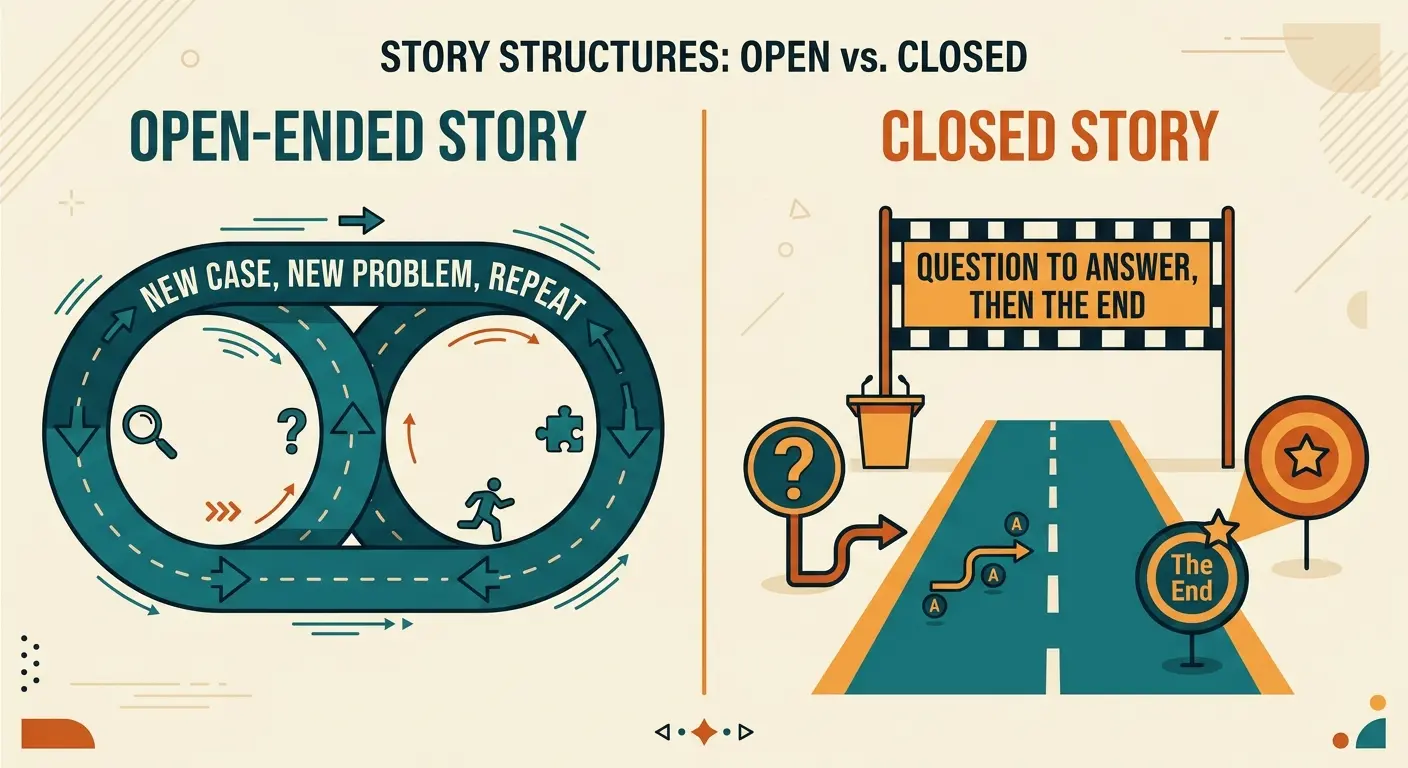
Some stories are naturally open-ended. They run on a format that can regenerate itself indefinitely: a new case every week, a new patient, a new problem in a workplace or a family. Nothing in the premise says "and that's the end." The engine can keep running as long as the audience keeps showing up. These are the shows that can, and tend to, run for years on end, almost "never-ending."
Other stories are closed. They're built around a question, a journey or a goal, and once it's answered, the story is done. These shows come with a built-in finish line.
Neither structure is superior. An open-ended show isn't lazy, and a closed one isn't automatically brilliant. But structure sets a show's lifespan far more than quality alone does. A long run might simply mean the story could run long. Think of marathon runners and sprinters. Nobody asks why the sprinter didn't run 26 miles. Different races, different rules.
The How I Met Your Mother Example
Let's illustrate with How I Met Your Mother, which, in my opinion, is the best romcom ever.
The premise gives the game away in the title. Ted is telling his kids how he met their mother. Eventually, we get to know how he met the mother of his children, and that's it. The story's finish line is baked into the premise, and the show has to end where the answer arrives.
And yet the creators took it up to nine seasons. That's brilliant work, and it deserves real credit. Stretching a story with a finish line built into its title across nine seasons takes serious creative muscle. But let's not lose focus. The point isn't how many seasons it ran. The point is that the structure decided how far the story could naturally go, and in my view the show's greatness comes from how well it used that structure, not from its season count.
"Cancelled" vs. "Ended": Why Do We Use One Word for Everything?
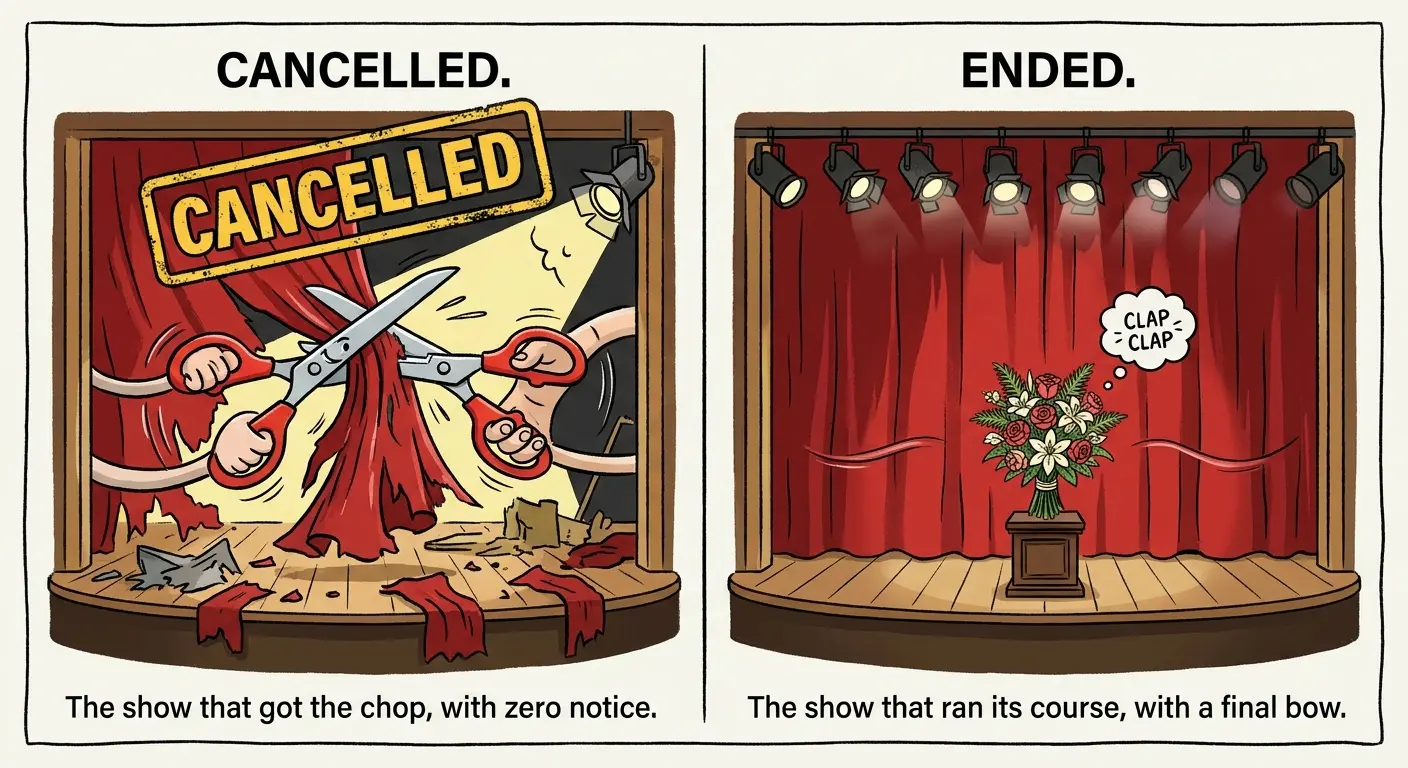
Here's something that confuses me. When a show ends, we rarely say it "ended." We say it was "cancelled." Hollywood especially (and maybe others too) uses that one word for all of them.
To be fair, some shows are literally cancelled. The plug is pulled, the story is left hanging, and the audience yells at their screens. But many shows simply finish what they set out to do, say goodbye and walk off stage, and we still call that "cancelled." It's like calling every graduation a dropout. Technically, a student left school. Wildly different stories.
Language matters because it shapes how we judge. If every ending is labelled a cancellation, every ending looks like a failure. Nobody says a great novel was "cancelled" when it reached its final chapter. We say it was finished. TV deserves the same dignity.
The Fair Counterpoint: Audiences and Executives
Now, I'm being careful here, because there's a real counterpoint. Generally, a show that runs longer keeps an audience, while shows that get cancelled are often those where the audience is running dry. We all know TV executives don't hesitate to pull the plug on underperforming shows. Sentiment isn't in the budget. (They really don't hesitate. Not even a little.)
So, intuitively, one would say the longer-running show is better. It's a fair instinct, but not quite right. Viewership measures how many people keep showing up, not how well a story is built. A show can hold a big audience through habit, familiarity or sheer love for its characters. A tight story can lose viewers for reasons that have nothing to do with the writing: a bad time slot, a marketing push that never came, a streaming algorithm having an off day. Ratings tell part of the story. They are not the story.
The Sweet Spot: Leave While They Still Want More
Someone once suggested that great shows maintain a healthy balance. They deliver just the right number of seasons, ending while the audience is still into the show, yet without leaving them hungry. I love that idea. It's the TV version of leaving the party at its peak instead of being the last guest stacking chairs at 3 a.m.
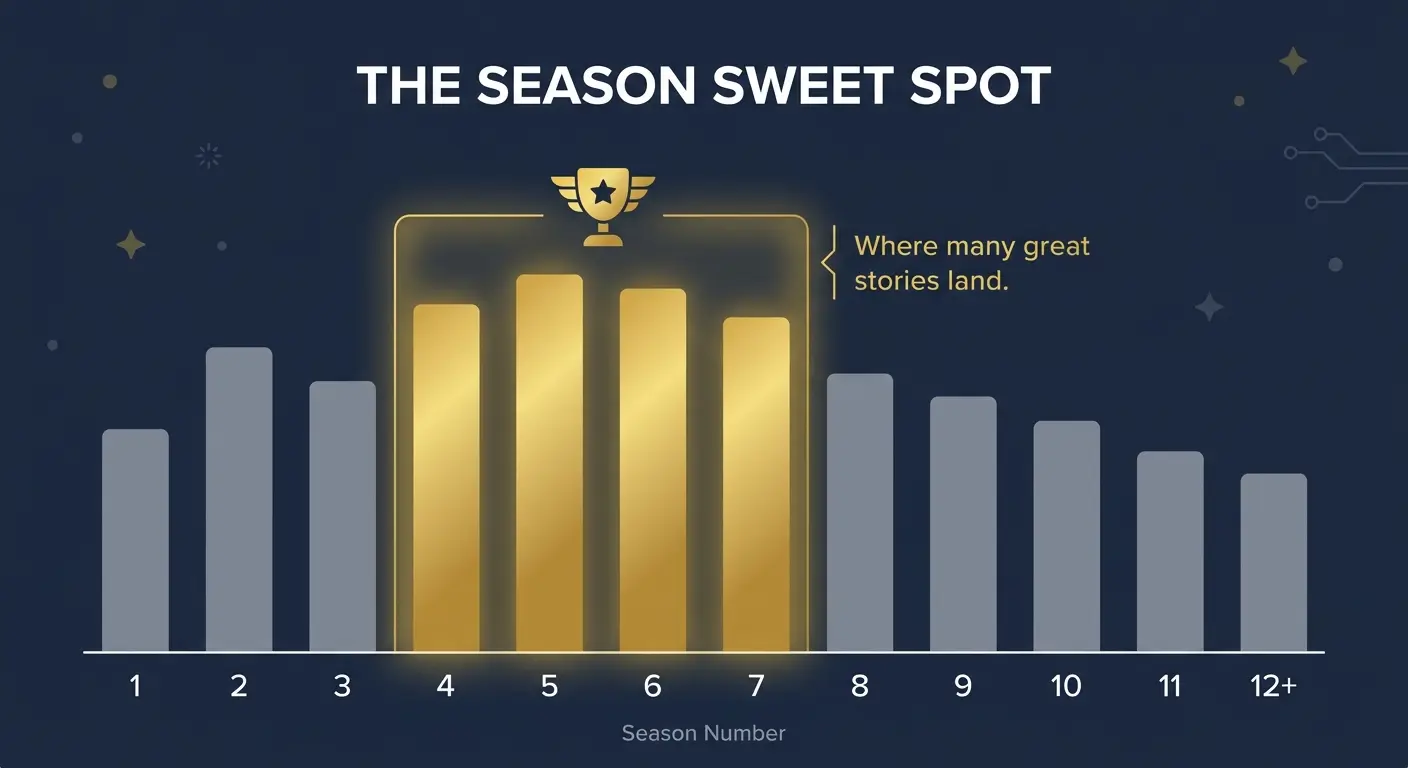
Where story is concerned, some of the very best shows run their course, mostly between four and seven seasons (both included), and then end. Of course, others run a little longer. Some run nine, eleven or twelve seasons and beyond. That's no crime. Those are great accomplishments, and the showrunners behind them deserve applause.
Here's the key takeaway: a show that runs longer may seem to have a better story than one with a shorter course (minimum four seasons), but that's not necessarily true. Some stories are simply more open-ended than others.
A Quick Test: Three Questions to Judge a Show Beyond Its Season Count
Next time you're debating a show's greatness, try these three questions before you quote the episode count:
Is the story open-ended or closed? If it can regenerate forever, a long run says less about quality than you think.
Did it end while the audience still cared? Leaving people wanting more beats outstaying the welcome.
Did it respect everything that came before? A satisfying finish matters more than a record-breaking tally.
Three questions, zero arguments with your cousin at the family barbecue. (Okay, maybe a few arguments.)
One Last Confession: The Power Book IV: Force Rule
A quick confession. While writing this, I realised Power Book IV: Force has only three seasons. 😲 Time for a rule change. For the sake of Tommy "F***ing" Egan, we're setting the minimum at three seasons. There is no way we're leaving that show off the list. 😂 Yes, I know it's a sequel. That's beside the point. Tommy would never let it go, and neither will I.
Final Thoughts: Length Isn't the Whole Story
So, is a longer-running show a better show? Not necessarily. Length tells you how long a show lasted. It doesn't tell you the whole story, pun fully intended.
Next time someone tells you their favourite show is better because it's on season fourteen, smile, nod, and ask one question: is it an open-ended story or a closed one? You'll learn more from that answer than from the episode count.