
Here's a fun experiment. Ask a random Zambian how much they spent on something last year, and watch the face they make. It's the same face we make when someone asks, "Do you remember what you ate on this day two Tuesdays ago?" Then comes the answer: a confident, "I don't know." Or, worse, a number invented on the spot to sound impressive.
Now ask how much they earned last year. If they're not in formal employment, the answer may be a shrug. If they are, they'll need time to calculate, more like an estate valuation, really, before giving you a figure.
This post is about fixing that, with the simplest tool in personal finance: tracking what comes in and what goes out. No complicated spreadsheets, no accounting degree, no stress. Just your numbers.

The "I Don't Know" Problem
I've noticed something about Americans: they talk about their numbers all the time. How much they earn a year. How much they spend on a car, a vacation or a coffee habit. Whether you're in a low-, middle- or high-income bracket over there, you tend to know your numbers.
We really don't do that here. I'm Zambian, so I say this with love, and from the inside.
I don't have the full picture on why. It probably has something to do with how the American economy works and how people there do (or used to do) taxes. I'm no expert, and I'm not American, obviously. But that's beside the point. The reasons matter less than the habit, and a habit is something we can build.
Receipts: The Great Delete
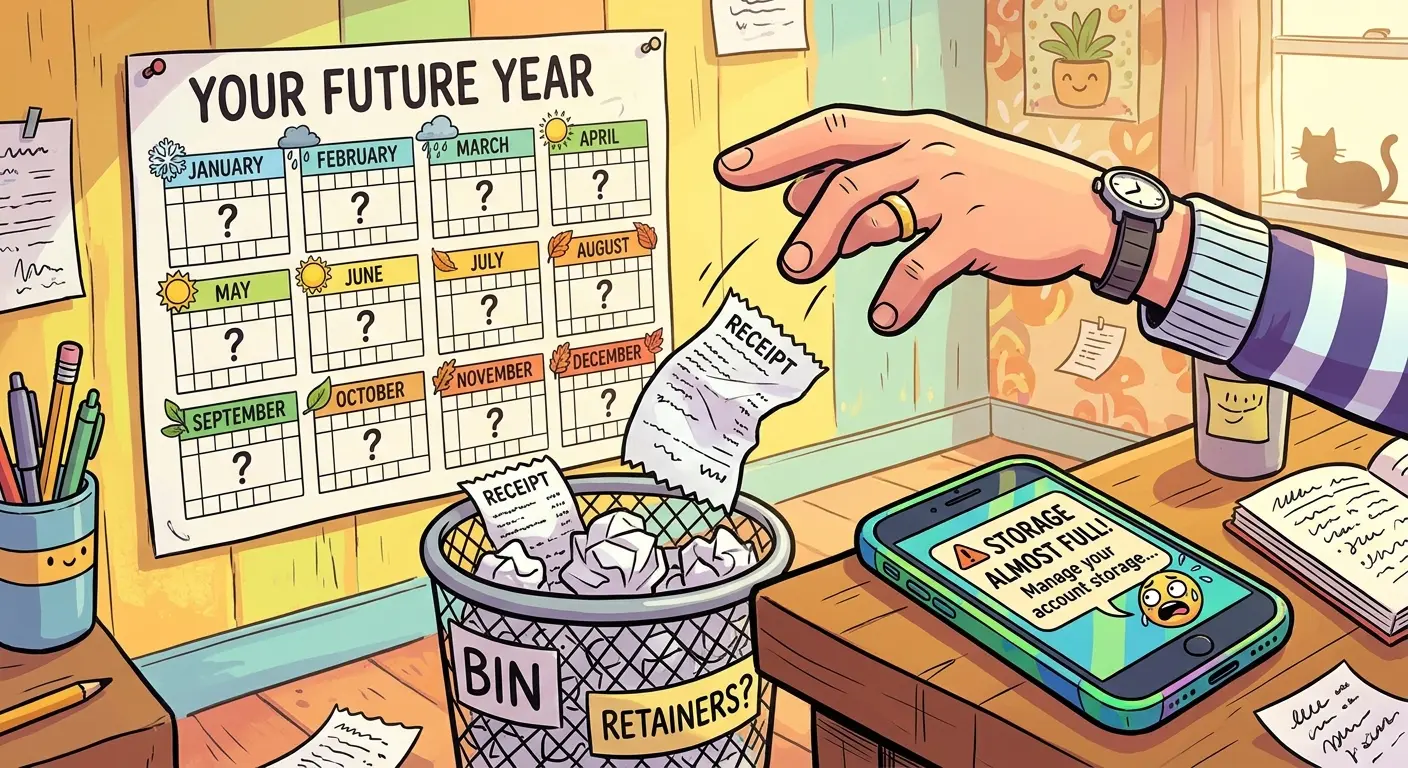
In Zambia, people can't wait to throw away their receipts. A purchase is made, a payment goes through, and the slip heads for the bin, usually before the person reaches the door. Or they delete the payment confirmation message to save storage. (Because a few kilobytes of text clearly stands between us and a working phone.)
Every thrown-away receipt is a number you'll never see again. Over a year, those missing numbers add up to a very large "I don't know."
What The Millionaire Next Door Says
The book The Millionaire Next Door talks about this in one of its early chapters, if I remember correctly, the very first one. (I read it four years ago, so forgive me if I'm off by a chapter.) The idea is simple: people who build wealth know where their money goes. They track it.
Companies do it. Households and individuals in America, and in a lot of other countries, do it. It's time we learned to do it in Zambia too. You've got to know how much you spend each year, and equally how much you earn. That's the basis for real planning and realistic goal setting. Without it, a goal is a wish wearing a nice shirt.
A Practical Example: Data Bundles vs. Wi-Fi
Let me bring this home with a real example.
Many households (father, mother and the children who can access the internet) spend more than K1,000 a month on data bundles, collectively. Nobody sits down and adds it up. Ten kwacha here, fifty there, and it disappears quietly, like socks in a washing machine.
Now compare it with the alternatives. A monthly Wi-Fi subscription from MTN or Airtel costs about K700. Starlink is about K850 (check current prices and any equipment costs before deciding). Here's the math:
K1,000 on bundles vs. K700 on Wi-Fi: about K300 saved a month, or K3,600 a year.
K1,100 on bundles vs. K850 on Starlink: about K250 saved a month, or K3,000 a year.
That's a lot of extra money going to bundles every year. And you can't know any of it if you aren't tracking your figures. The number, not the guess, is what shows you the leak.
The Hand-to-Mouth Mindset
Most people live with what's commonly called a "hand to mouth" mentality: money comes in, money goes out, and the space between is a mystery. I speak in general terms here. There are surely Zambians who track their own figures, and I respect that. In my opinion, though, they make up maybe 1% of the population or less. (That's my honest estimate, not a survey, so don't quote me in your thesis.)
Hand-to-mouth living isn't a character flaw. It's a habit, and habits can change. Tracking turns "where did it all go?" into "here's where it went." That's the first step toward deciding where it should go.
"But I Can't Read or Write" (Or: "I Hate Math")
Before someone brings up the word "illiteracy," let me address it.
I've always struggled with the idea that someone can't read or write. When people say it's because they didn't go to school, I ask, why does that stop you? Tell me there was no one to teach you, and I'll understand. I might even teach you myself (I'm not a professional teacher). But strip away the certificates, diplomas and degrees, and education is essentially learning to read, write and do basic math. That's it.
If you're an adult who can't read or write, you might have children or grandchildren who can help. That's education too! And if you simply dislike calculations, hand the job to one of your children. It's a great assignment for them, especially with a small incentive attached. A few kwacha for a correct monthly total beats a long lecture about financial responsibility.
(I've just realised everyone reading this can read. 🤦 You get my point, though.)

How to Start Tracking (It's Easier Than You Think)
The good news is that apps and software make this process easier than ever. Here's a simple starting plan:
Keep every receipt. Put them in an envelope, a box or a drawer. Demand receipts wherever possible.
Save your payment messages. Screenshot or keep them instead of deleting them. Storage is cheaper than ignorance.
Write it down daily. Use a notebook, a spreadsheet or a budgeting app. Date, amount, what it was for. Ten seconds is enough.
Add it up weekly. If you have weekly expenses (transport, groceries, airtime), track those too.
Total it monthly, then yearly. Track how much you spend on each item per month, then per year.
Track your income, too. Spending is only half the picture. Know exactly how much you earn.
Make it a family project. Let the kids do the adding, with a reward attached.
Once you have a few months of numbers, patterns appear. You'll find your own version of the data-bundle leak, and you'll know what to do about it.
Final Thoughts: Know Your Numbers
Tracking income and expenses isn't about being rich, being American or being good at math. It's about knowing where you stand, so you can decide where you're going. Real planning and realistic goals start with real numbers.
So keep the receipt. Save the message. Write it down. Add it up. Your future self (and your wallet) will thank you.